




The art of living in Haute-Provence is rooted in a tradition of solidarity and sharing. Steeped in the flavors and colors of the land, Haute-Provence’s culture is made up of Alpine and Provencal influences that have shaped the traditions and skills handed down from generation to generation.
Le Provençal,
lengonostro
In rural Haute-Provence, Provençal was spoken on a daily basis, in the fields, at the café, in the town square and among families. Occitan was spoken here until the middle of the last century. This singing language, with its Midi accent, is an integral part of the heritage of Haute-Provence. Supported by local and regional associations, volunteers and ambassadors, Provençal has been enjoying a renaissance over the past thirty years. The regional council officially declared it a regional language, and the French Parliament included an article in the Constitution declaring that regional languages are part of France’s heritage. We’re rediscovering them on radio and TV shows, and on road signs, as if to assert an identity we’re not ready to give up. Actions are being taken to promote this linguistic heritage in schools, which, although no longer “alive”, remains a rich resource in its own right.

The Lavender Corso
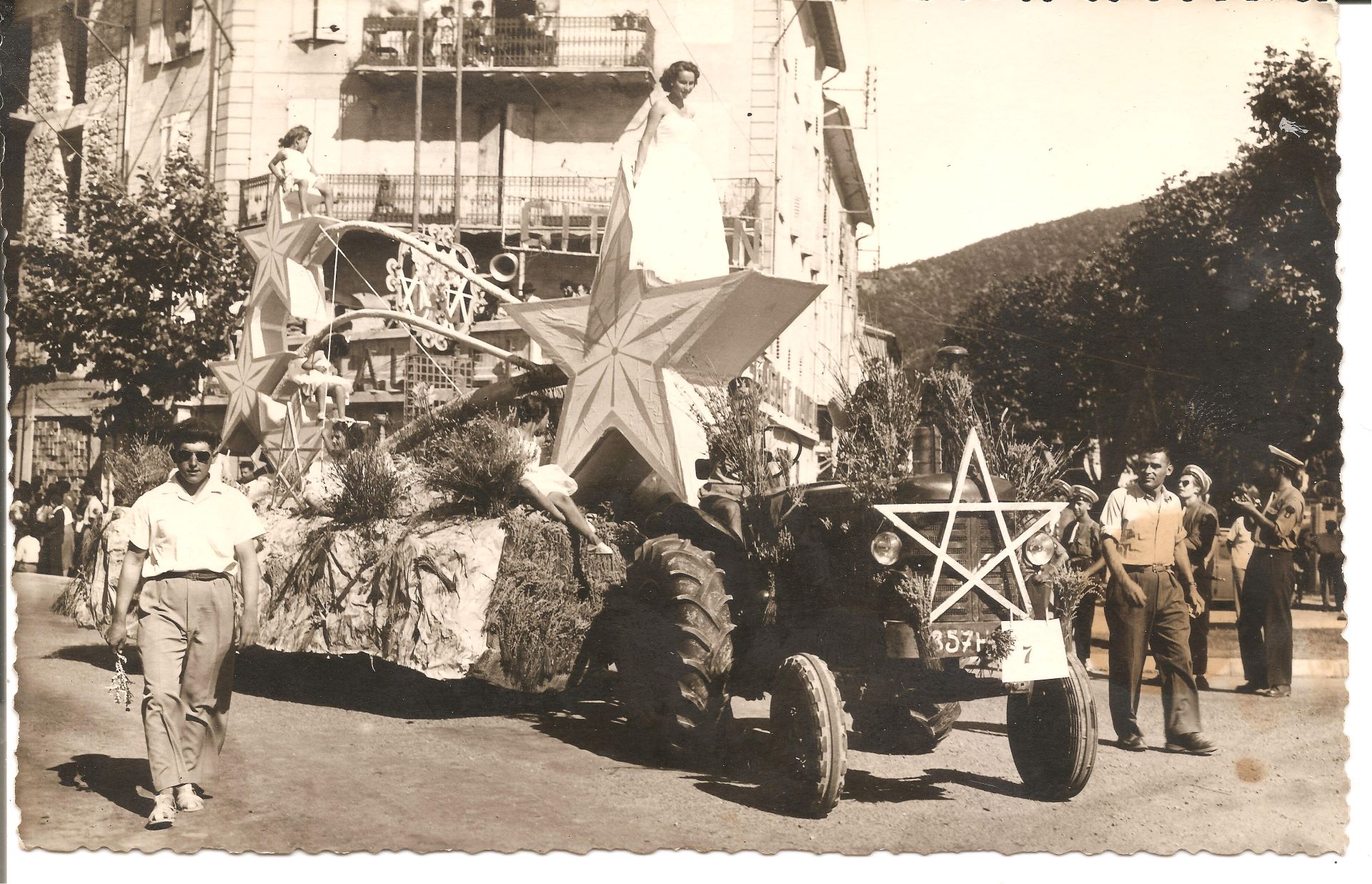
Every year, on the first Sunday in August, Digne-les-Bains celebrates lavender with its famous corso. This popular festival is one of the biggest in the region.
Created in 1929 to promote the little blue flower, the Corso de la Lavande will remain faithful to the theme chosen for its first edition. Digne now proudly boasts the title of “Lavender Capital”. Designing and making the floats with thousands of crepe paper flowers requires hours of work, which passionate volunteers put in every year. Thanks to them, traditions are preserved and shared with thousands of visitors. The event is organized by the Comité des fêtes de Digne-les-Bains, which also offers day and night parades.
Since 1921, the Lavender Fair has been organized during the same month to reward producers.
La Bélugue des Sièyes and le Quadrille sisteronais
Like many others, these two groups are dedicated to preserving the folk heritage of Haute-Provence. To the sound of the fife and tambourine, the musicians perform the farandole, the quintessential Provencal dance, as well as the rigodon from the Dauphiné. Dressed in traditional costumes, the dancers and musicians, both adults and children, are familiar to the inhabitants of Haute-Provence, captivating visitors as they take to the squares of towns and villages. There are hardly any festivals around Digne and Sisteron that don’t open with the “Bélugue” or the “Quadrille”. These folk groups are also a reminder of the importance of social ties in traditional society, where festivities and dancing helped maintain the cohesion of the village community.
The Saint-Vincent star
In the 19th century, goldsmiths in Digny came up with the idea of setting “lucky” fossils in gold or silver to make rings, brooches or pendants.
Crinoids have inhabited the seabed for almost five hundred million years. Like sea urchins and starfish, they belong to the echinoderm “family”. Today, these strange animals can be found in all the world’s seas, at depths ranging from 100 to 3,000 metres. Their articulated limestone skeleton allows them to orient themselves in the direction of the current to filter nutrient particles from the seawater. Fragments of their fossilized skeletons are frequently found in the Haute-Provence Geopark area, notably on the Saint-Vincent hill, as crinoids were already living in Jurassic seas, in particular Pentacrines. These elements, in the shape of a finely chiselled five-pointed star, have always fascinated mankind.


Cuisine and gastronomy
Haute-Provence cuisine has the colors and flavors of its terroir. Our cuisine is sincere and authentic, with Mediterranean, Provencal and Alpine influences. It’s based on traditions, quality products and know-how handed down from generation to generation.
Anchovy fougasse, Sisteron pieds-paquets, black nougat and pistou soup are just a few examples of the region’s culinary traditions, all of which have a strong sense of identity.
Over the last few years, producers, restaurateurs, public and economic players have been mobilizing to defend healthy eating with local, fresh and natural products that are good for health and the environment. They can be found at the typical Provencal markets of Digne, Sisteron or Aiglun, and throughout the region.
Transhumance
A land of links and passages, Haute-Provence has been traversed by herds for centuries, even millennia. Transhumance is a pastoral practice closely linked to Mediterranean geography and climate. It is explained by the proximity between low-lying pastures and mountain pastures. The management of natural resources is at the heart of the transhumance system. While perpetuating the ancestral use of mountain pastures, breeders and shepherds have adapted their practices to changing conditions: herd and resource management, health precautions, landscape maintenance, preservation of grassland biodiversity… today, transhumance faces new challenges, notably climate change and the return of large predators.