French Geoparks

© J.Subias

Map of French Geoparks

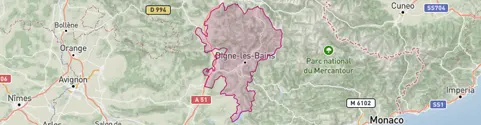
Haute-Provence UNESCO World Geopark

Boasting an exceptional geological heritage, and bearing the traces of over 300 million years of Earth’s history, the Haute-Provence UNESCO Global Geopark was the first Geopark in the world to be created in 2000. Located in the heart of the Southern Region and the Alpes de Haute-Provence département, it brings together 67 communes around Digne-les-Bains, Sisteron, Seyne and Moustiers-Sainte-Marie…

The rocks and fossils of the Luberon tell a story. In the Luberon, geology is everywhere: the rounded ridges of the Grand Luberon, the rocky combes of the Petit Luberon, the colored ochres among the pines, the gray marls in the hills… It is a fundamental component of the landscape and relief, and also partly determines land use.

The Massif des Bauges is a natural island of waterlogged limestone, with a wealth of flora and fauna, farmland, forests and mountains, not to mention the men and women who preserve it and bring it to life. Discreetly nestled between Savoie and Haute-Savoie, it covers 90,000 hectares. Its beauty is for those who appreciate it.

The geological heritage of the Chablais Geopark can be explored through two main themes: the history of the formation of the Alps and Quaternary glaciations. This remarkable natural area permeates the culture and life of its inhabitants and numerous visitors. Traditional buildings, mountain lifestyles, alpine pastures, tales and legends, and the natural riches of the Thonon and Evian mineral waters all bear witness to the strong links between man and nature.

The Monts d’Ardèche Geopark is a treasure trove for geologists and geological enthusiasts alike. All eras are represented here, dating back over 550 million years. Volcanism is well represented, but other aspects of geology are also visible: granitic or sedimentary landscapes, mining remains and thermal activity are just some of the many facets of geological heritage.

There are 300 phosphatières in the Causses du Quercy: these sinkholes were formed between 50 and 20 million years ago. Over these tens of millions of years, they acted as natural traps, filling up with rocky elements as well as animal and plant remains. Today, the phosphatières are the only group of sites in the world to have recorded 30 million years of the evolution of animal (especially mammalian) and plant life. More than 700 species have been identified from the 160 phosphatières that have been scientifically studied and excavated.

Situated on the edge of the Massif Central, northwest of Lyon and immediately adjacent to the Alps, the Beaujolais region has inherited one of the richest and most complex geologies in France, and in some respects, on Earth. The diversity of its subsoil and landscapes is the result of the convergence of numerous geological phenomena and structures that have left their mark on the lives of the people who live here.

From the vertical cliffs of the Crozon peninsula to the crests of the Monts d’Arrée, via the harbour of Brest, the Aulne valley and the chaos of Huelgoat, the landscapes of the Armorique Geopark represent a whole part of the Earth’s history. Logonna stone, kersantite, granite or Armorican sandstone: a wide variety of rocks carry memories and are reflected in our built heritage, both civil and religious.

Structured around an east-west ridge line, the Normande-Maine Regional Nature Park and Unesco World Geopark is home to unique landscapes that have influenced human occupation from prehistoric times to the present day! Rocky escarpments, sheer cliffs, whitewater, belvederes and steep natural sites are just some of the unexpected wonders that define the identity of this territory. These landscapes are the legacy of a long past, which began 600 million years ago.