





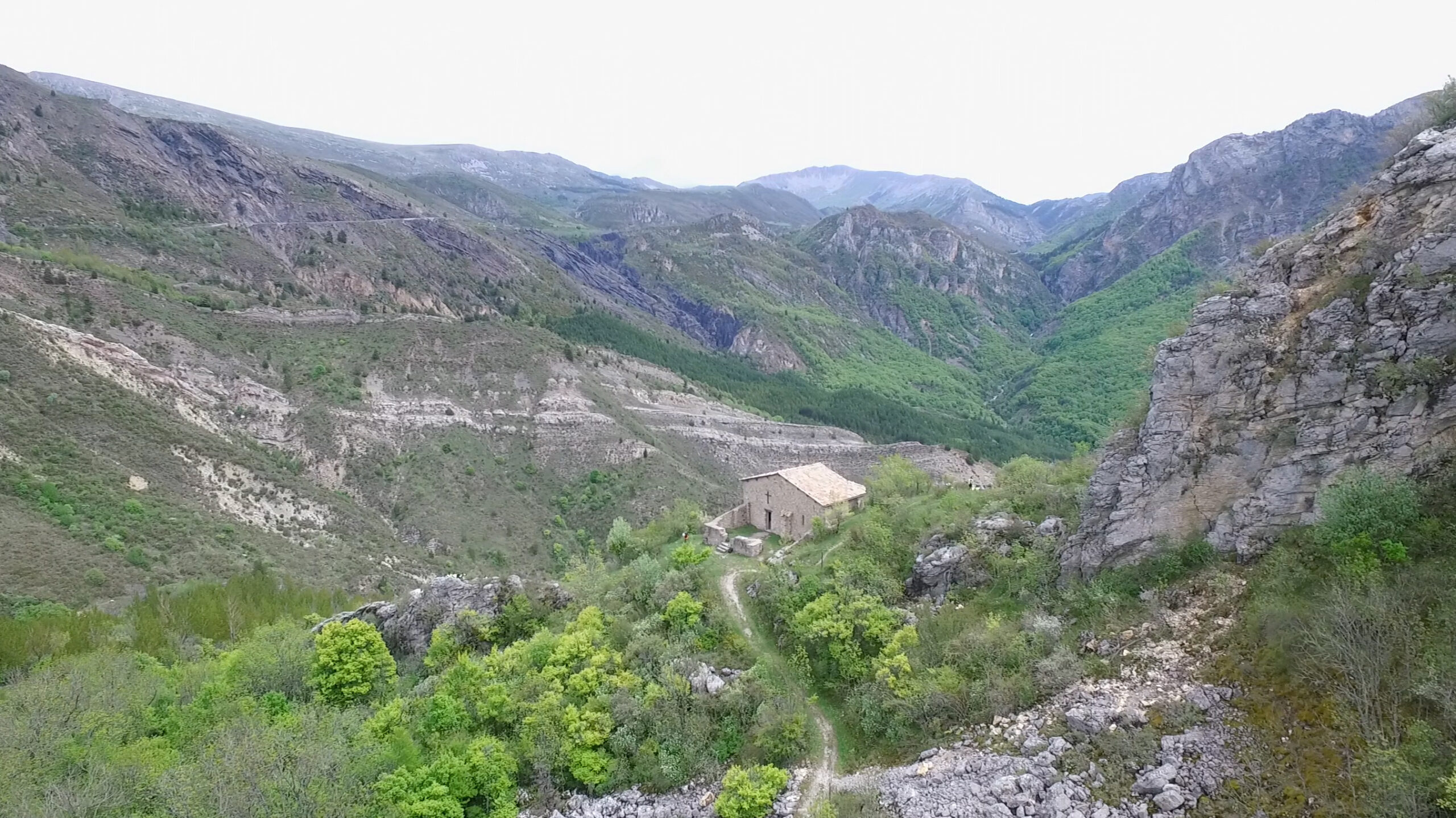
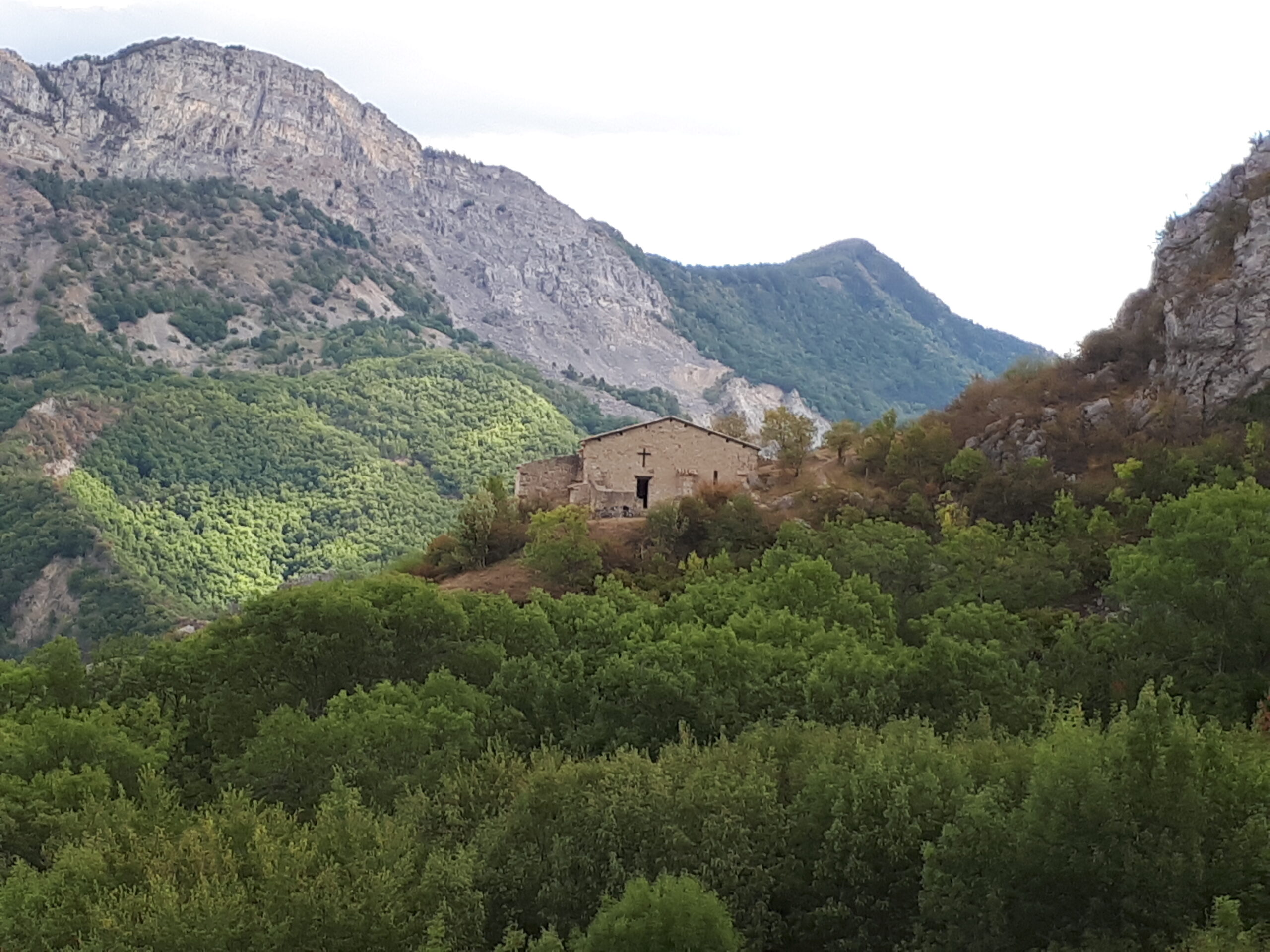
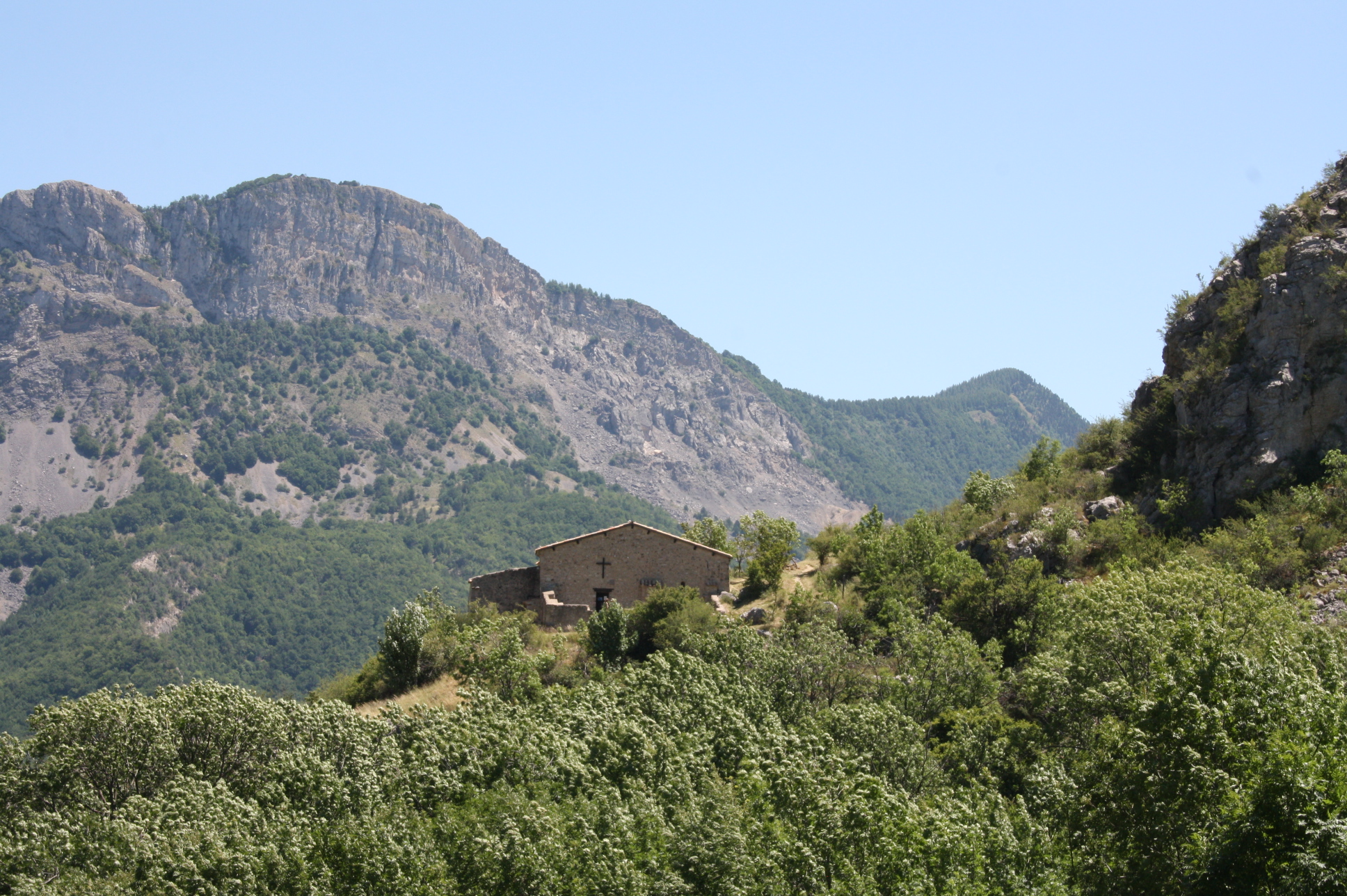
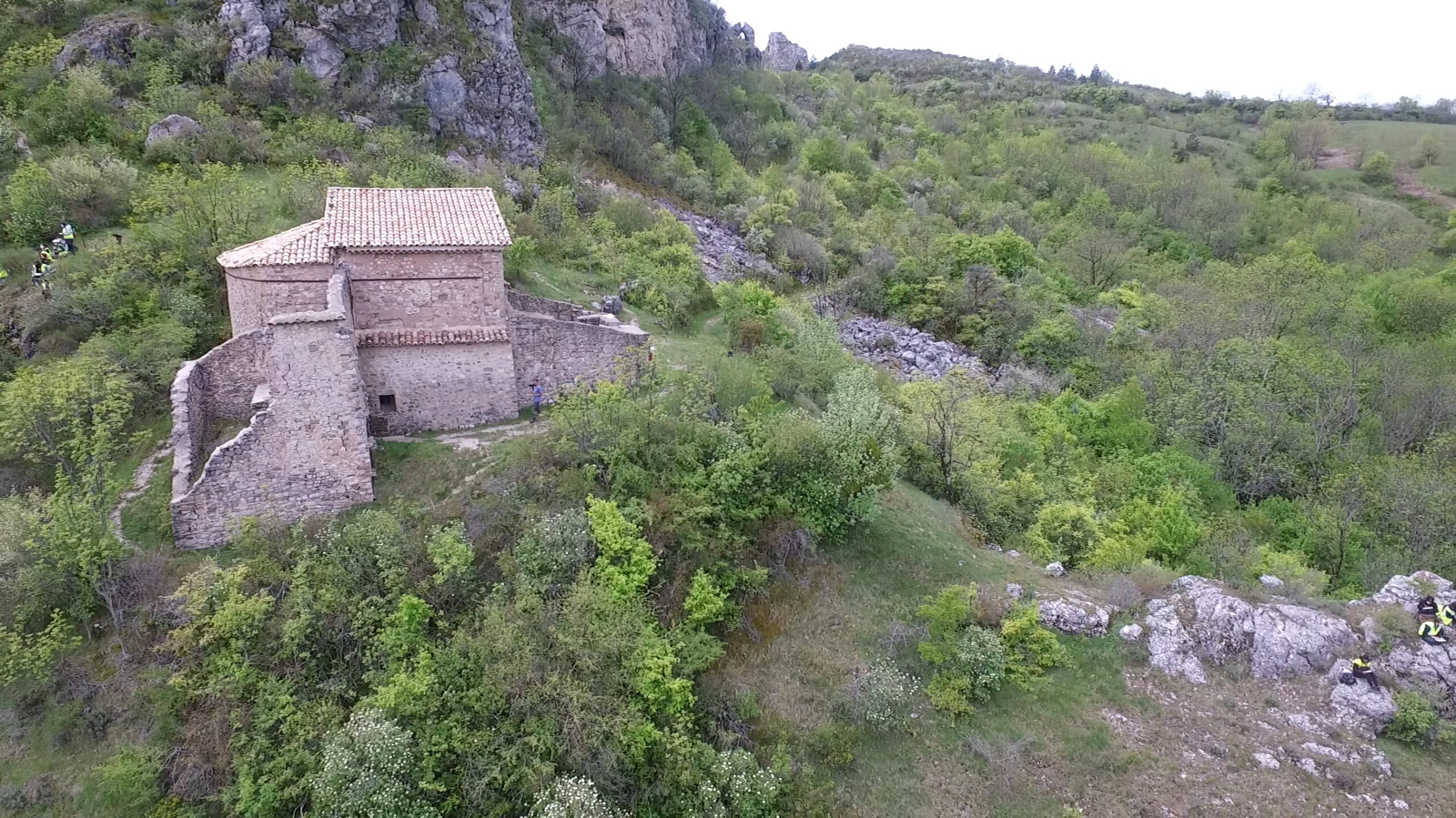
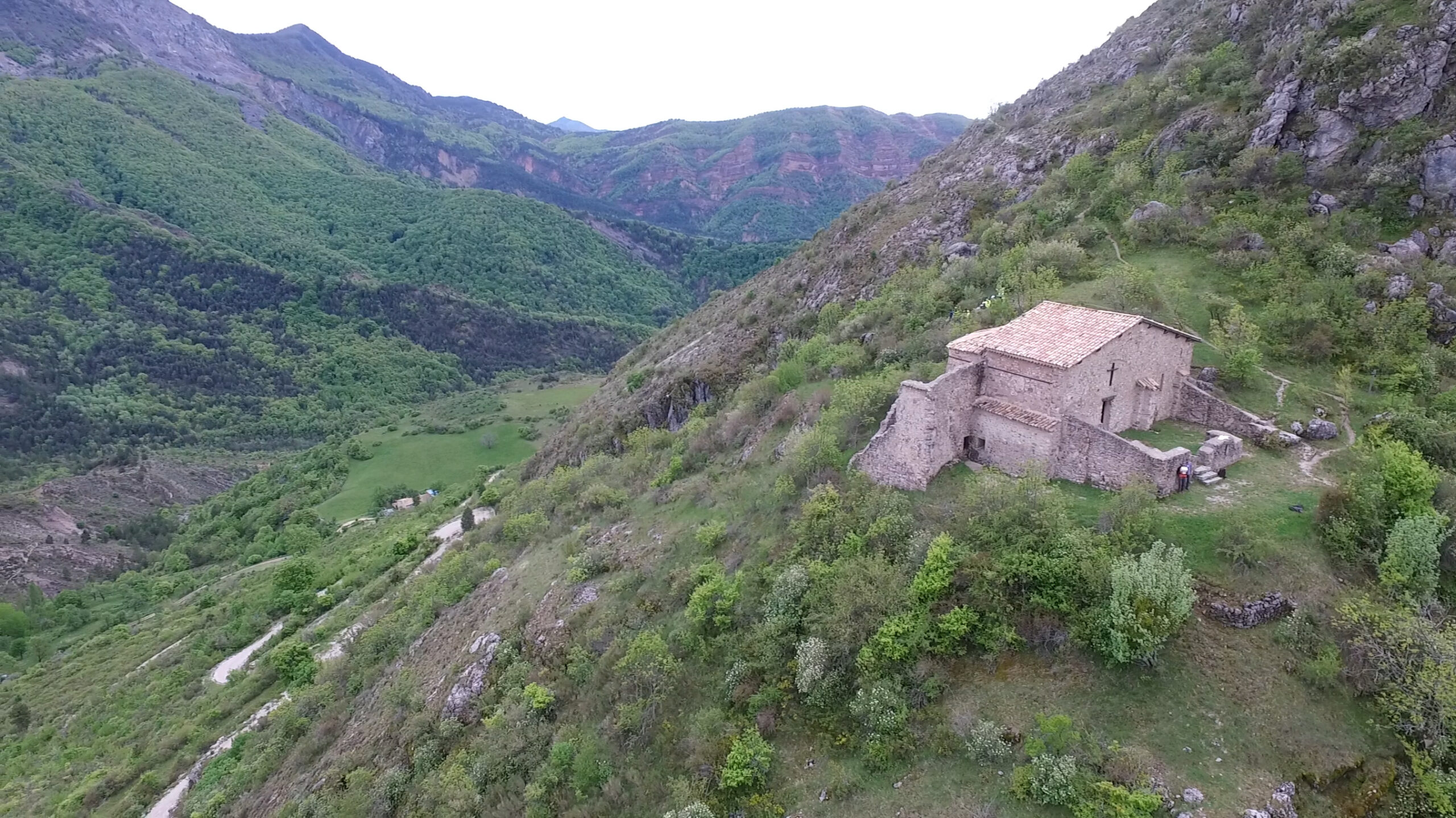
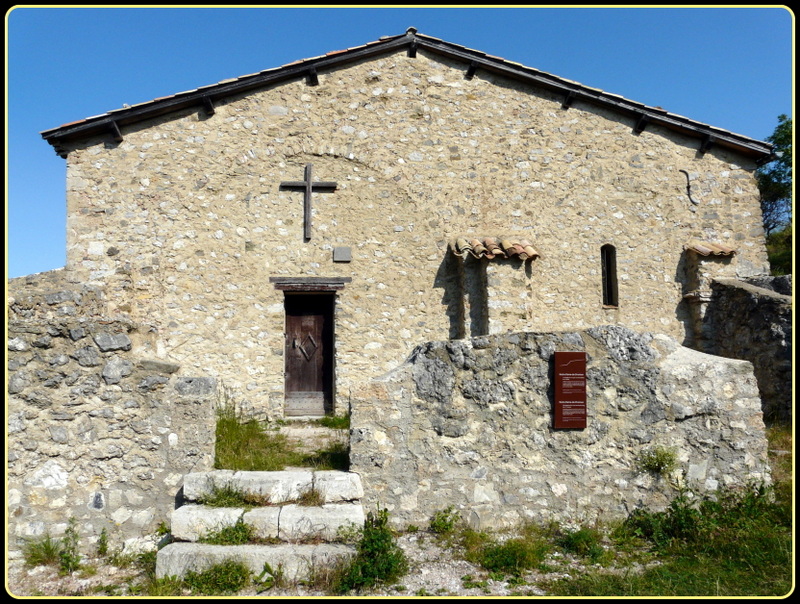
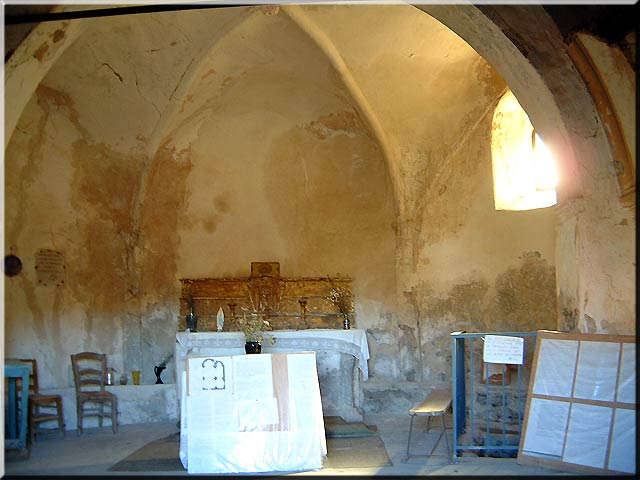
Probably built in the 11th century, this chapel is a truly spiritual place. Nestled in an impressive natural setting, it invites humility and meditation.
Clinging to the rock face, N.-D. de Dromon is exceptional for its early Romanesque crypt. The chapel was restored and enlarged in 1682; despite numerous alterations, it retains important Romanesque features. Originally, the church comprised an apse and two apses opening onto a nave and two aisles.
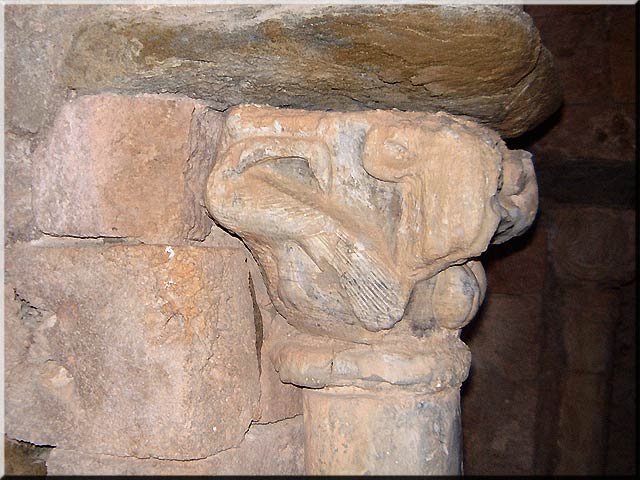
The sculptures in the crypt bear witness to several influences (Roman tradition, Provençal Romanesque art, Byzantine art) and the alabaster capitals have no equivalent in Haute-Provence. They date from the 10th century and feature motifs familiar from Merovingian art (peacocks, rams’ heads and testicles, braids, etc.). Part of the Dromon rock, protruding into the crypt, evokes the belly of a pregnant woman; this “fertility stone” certainly refers to a pagan cult predating the Christian era.